Best MBA Alternatives for Finance in 2026: CFA vs FRM vs CAIA vs CIPM vs CERA. In 2026, the finance career landscape in India is evolving rapidly. With tuition fees at top-tier institutions like IIMs and ISB reaching ₹25–35 lakhs, many aspirants are rethinking the traditional MBA route. At the same time, global finance certifications are gaining popularity for being more specialized, flexible, and cost-effective.
The key question today is no longer just “Should I pursue an MBA in Finance?” but rather “Which qualification offers the best return on investment and aligns with my career goals?”
This guide provides a detailed comparison of the top MBA alternatives for finance—CFA, FRM, CAIA, CIPM, and CERA—covering career paths, difficulty level, costs, and long-term value.
Best MBA Alternatives in India With High Salary
1. Quick Comparison: Finance Certifications at a Glance (2026)
| Certification | Best For | Difficulty | Duration | Estimated Cost (INR) | Entry Salary (India) |
|---|---|---|---|---|---|
| CFA® | Portfolio Management, Investment Banking, Research | Very High | 2.5–4 Years | ₹3.5–5.0L | ₹6–12 LPA |
| FRM® | Risk Management, Treasury | High | 1–2 Years | ₹1.5–2.5L | ₹6–11 LPA |
| CAIA® | Private Equity, Hedge Funds | Medium | 1–1.5 Years | ₹2.5–3.5L | ₹7–14 LPA |
| CIPM® | Performance Measurement | Medium | < 1 Year | ₹1.0–1.5L | ₹5–9 LPA |
| CERA® | Enterprise Risk, Insurance | Very High | 3–5 Years | ₹4.0–6.0L | ₹8–16 LPA |
Note: Salaries vary based on experience, location, and employer.
Explore high-ROI alternatives like CFA, FRM, and Product Management programs. Explore study abroad options.
2. Deep Dive: Top Finance Certifications
2.1 CFA® (Chartered Financial Analyst)
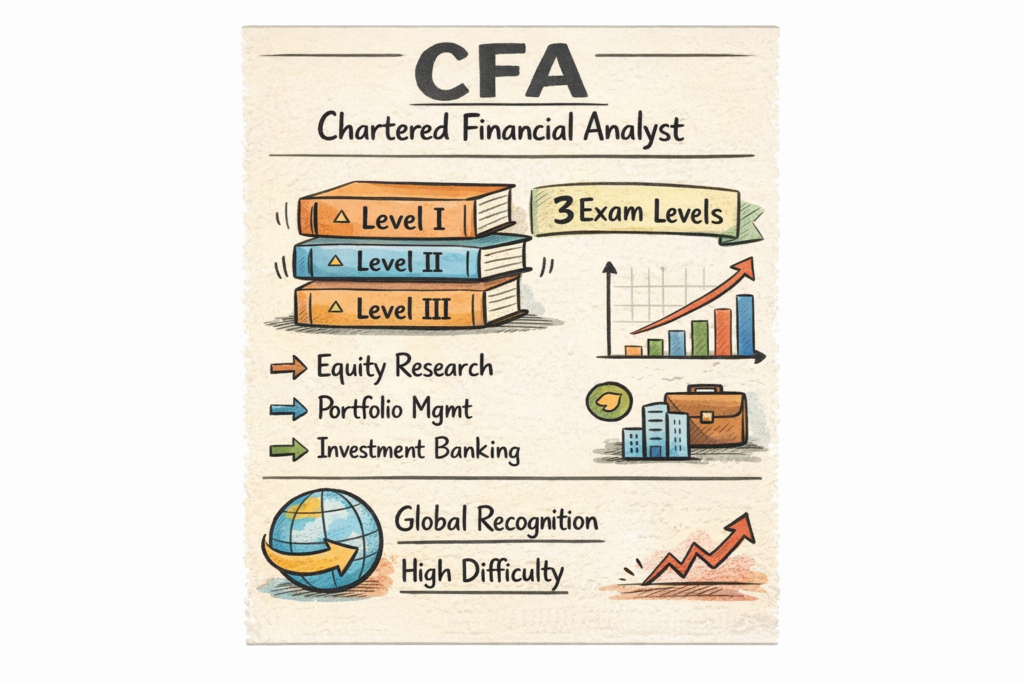
The CFA charter is widely regarded as one of the most respected credentials in investment finance. It is administered by the CFA Institute and focuses on investment analysis, portfolio management, and ethics.
What it is
A globally recognized certification for investment professionals.
Best suited for
- Equity Research
- Investment Banking
- Portfolio Management
- Asset Management
Key highlights
- Three exam levels
- Strong emphasis on ethics and valuation
- Requires ~4,000 hours of relevant work experience
Pros
- Strong global recognition
- Deep technical finance expertise
- Valuable for long-term career growth
Cons
- High difficulty level
- Requires long-term commitment
Practical insight
CFA significantly strengthens your profile, but practical exposure (internships, financial modeling skills) is equally important.
2.2 FRM® (Financial Risk Manager)
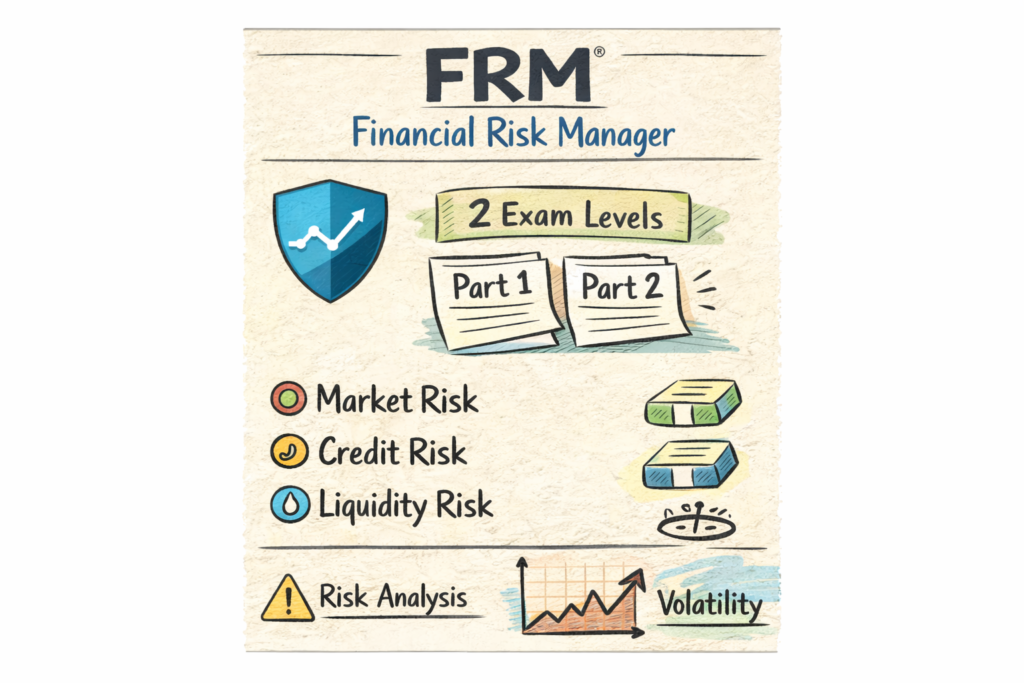
The FRM certification, offered by GARP, is focused entirely on financial risk management—an essential function in modern financial systems.
Best suited for
- Risk Management
- Banking Treasury
- Credit Risk Roles
Key focus areas
- Market risk
- Credit risk
- Operational risk
- Liquidity risk
Pros
- Highly specialized and industry-relevant
- Shorter duration than CFA
- Strong demand in banking and financial institutions
Cons
- Narrower scope compared to CFA
- Less suited for front-office roles
Industry insight
With increasing regulatory requirements and risk oversight, FRM professionals are in steady demand.
MBA vs FRM: Salary, Fees, Career Scope & ROI Comparison
2.3 CAIA® (Chartered Alternative Investment Analyst)

The CAIA designation focuses on alternative investments such as private equity, hedge funds, real estate, and digital assets.
Best suited for
- Private Equity
- Venture Capital
- Hedge Funds
- Family Offices
Key highlights
- Two exam levels
- Focus on non-traditional asset classes
- Growing relevance globally
Pros
- Niche specialization
- Strong alignment with high-growth finance segments
- Shorter completion time
Cons
- Less mainstream than CFA
- Opportunities concentrated in financial hubs
Insight
CAIA works best when combined with experience or another credential like CFA.
2.4 CIPM® (Certificate in Investment Performance Measurement)
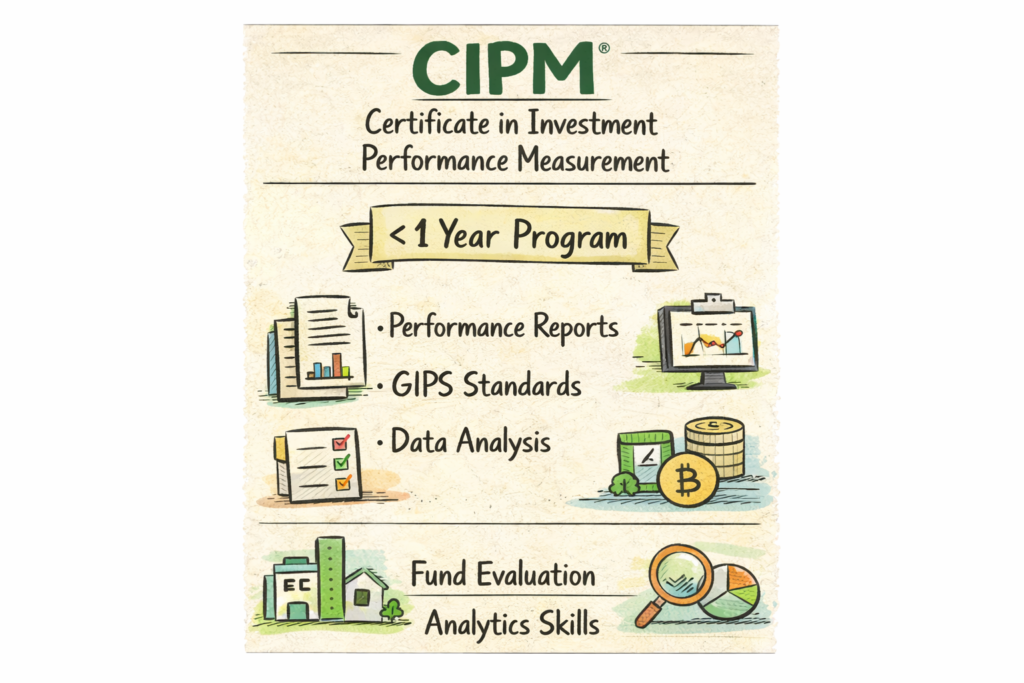
The CIPM program focuses on investment performance evaluation and reporting standards.
Best suited for
- Performance Analysts
- Fund Reporting
- Investment Analytics
Key focus areas
- Performance attribution
- GIPS standards
- Portfolio evaluation
Pros
- Short duration
- Specialized skillset
- Strong add-on to CFA
Cons
- Limited standalone value
- Niche career path
Insight
Ideal for candidates interested in analytics within asset management firms.
2.5 CERA® (Chartered Enterprise Risk Analyst)
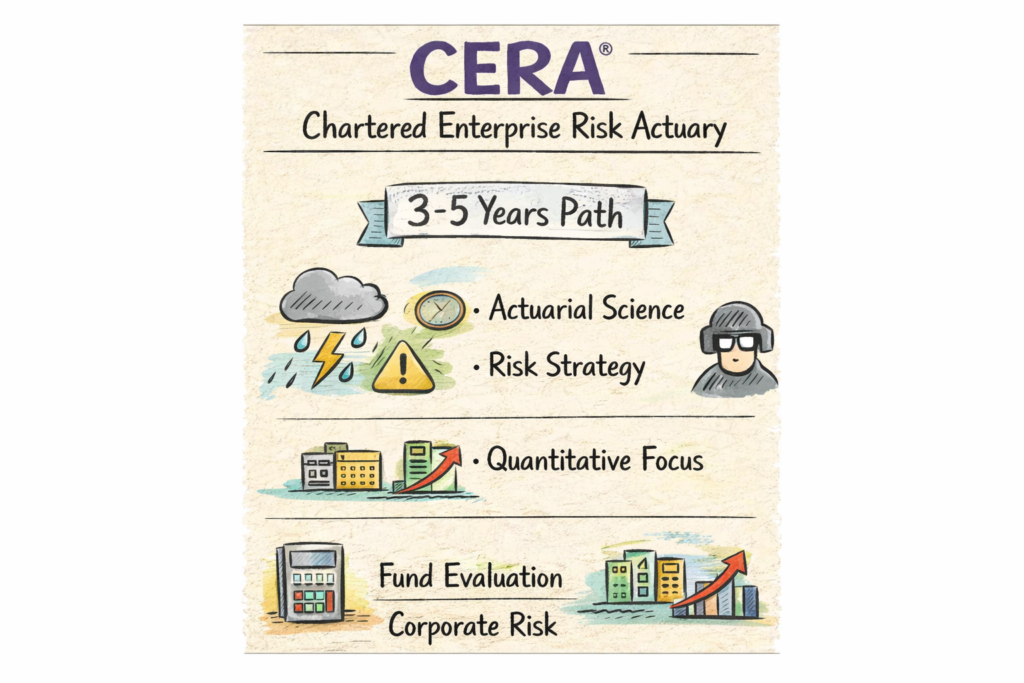
CERA is an advanced risk-focused credential rooted in actuarial science and enterprise risk management.
Best suited for
- Insurance Industry
- Enterprise Risk Roles
- Actuarial Careers
Key highlights
- Part of actuarial pathway
- Covers financial and non-financial risks
- Highly quantitative
Pros
- Deep expertise
- Strong demand in insurance and consulting
- High long-term potential
Cons
- Very rigorous
- Less aligned with mainstream finance roles
Insight
Best suited for candidates committed to actuarial or enterprise risk careers.
3. MBA vs Certifications: ROI Comparison in 2026
| Factor | Tier-1 MBA (India) | Finance Certifications |
|---|---|---|
| Cost | ₹25L – ₹35L | ₹1L – ₹5L |
| Duration | 1–2 Years | Flexible |
| Learning Style | Broad | Specialized |
| Networking | Strong | Moderate |
| Placement | Structured | Self-driven |
Key takeaway
Certifications offer strong ROI for technical roles, while MBAs provide structured career entry and networking advantages.
4. Should You Combine an MBA with a Certification?
High-impact combinations
- MBA + CFA → Investment roles and consulting
- MBA + FRM → Risk leadership roles
- CFA + CAIA → Asset and fund management
Practical perspective
An MBA helps open doors, while certifications build deep expertise.
5. Decision Framework
- Want to work in equity markets → CFA
- Interested in banking risk → FRM
- Targeting private equity/VC → CAIA
- Interested in analytics/reporting → CIPM
- Interested in insurance/actuarial → CERA
6. Frequently Asked Questions
Is CFA better than MBA Finance?
They serve different purposes. CFA provides technical depth, while MBA offers broader exposure and networking.
Can I do CFA or FRM without an MBA?
Yes. Many professionals pursue these certifications after undergraduate studies.
Which certification is best for investment banking?
CFA is the most relevant certification, though top MBA programs still play a major role in India.
What is the salary difference between CFA and FRM?
Entry-level salaries are comparable. Long-term growth depends on role, experience, and performance.
Are these certifications globally recognized?
Yes. CFA, FRM, and CAIA are widely recognized across global financial markets.
Conclusion
Finance certifications have evolved into powerful career pathways, offering flexibility, specialization, and global recognition. For many aspirants, they provide a strong alternative—or complement—to an MBA.
The right choice depends on your career goals. If you value structured placements and networking, an MBA may still be beneficial. If you prefer technical depth and global mobility, certifications can offer a strong foundation.
In many cases, combining certifications with practical experience—or an MBA—creates the strongest long-term advantage.